
Why Designing a Tiny Home Is More Intimate Than You Think (And Why That's a Good Thing)
Aug 26, 2026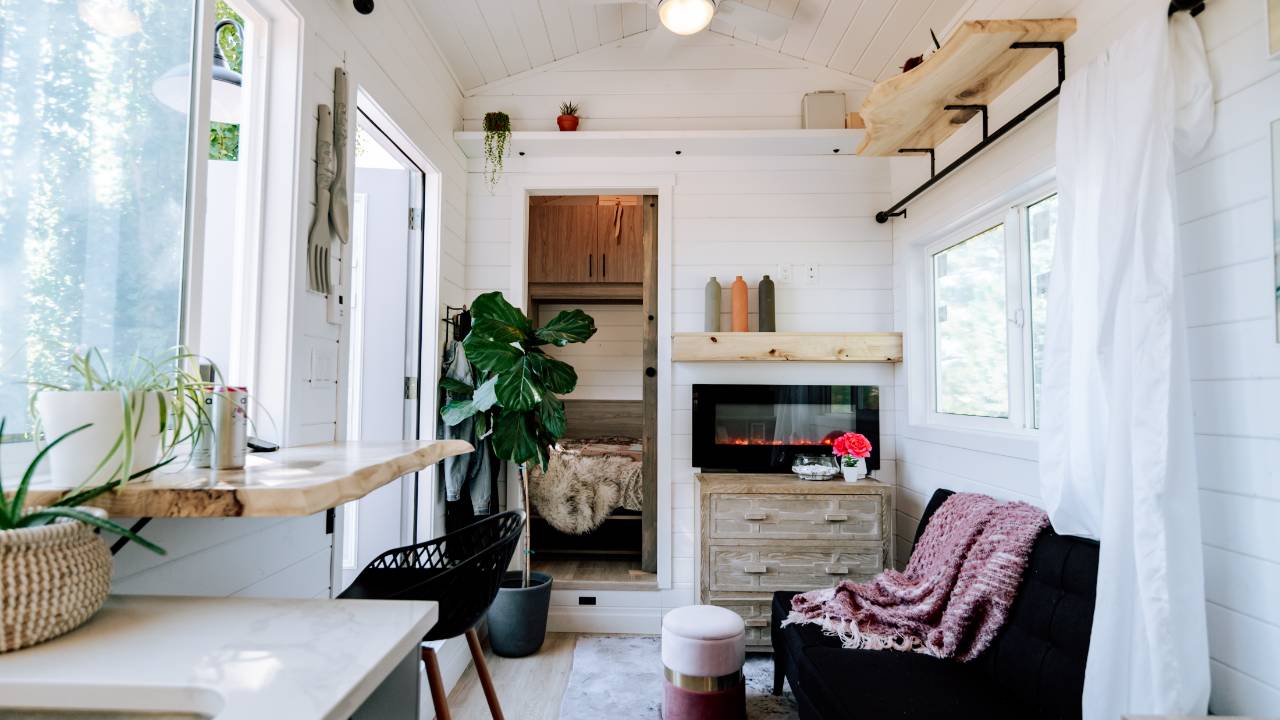
After 20 years of designing homes for people, I have learned that the best ones are never just about the finishes.
I have been doing design calls for a long time. And I can tell you, without hesitation, that the ones that produce the most beautiful results are never the ones where a client shows up with a perfectly organized Pinterest board and a colour code already memorized.
The best ones are the ones where someone shows up with a feeling they are trying to build.
I had a client recently who knew exactly the world she wanted to walk into every time she opened her door. She had a specific reference, a specific mood, a specific warmth she had been carrying around in her head for years. And over two calls, we built it, piece by piece, colour by colour, trim decision by trim decision.
That process is not fast. It is not a checklist. And it is absolutely the point.
"Building something you have been dreaming of for years should be fun. We work hard to make sure it is."
Why Small Square Footage Makes Design More Important, Not Less
Here is what surprises people. They assume that because a tiny home is smaller, the design decisions are simpler. Fewer rooms, fewer choices, less to think about.
It is actually the opposite.
In a small space, every single decision is load-bearing. The wall colour you choose is going to be everywhere. The cabinet finish is going to be in your eyeline constantly. The flooring is going to be the backdrop for your entire life inside that home. There is nowhere to hide a bad decision, and there is no other room to distract from it.
That is why the design process at Teacup is involved. Not overwhelming, involved. There is a difference.
When I know what a client is going for, really know it, I can catch things before they become problems. On a recent call, a client had chosen two wall colours she loved separately. But when I looked at them together, I knew she would not be able to see the difference once they were on the walls. I told her. She did not need to hear that her choice was wrong. She needed to hear what I actually saw so she could make a better one.
That is what twenty years of design experience looks like in practice. Not telling people what they want to hear. Telling them what they need to know, because I actually understand what they are trying to create. The more I know about a client, the better job I can do. That is not an accident. It is the whole idea.
The Storage Conversation Nobody Wants to Have
Let me say something that might surprise you coming from a builder.
We will probably talk you out of lining your walls with shelves.
I know. You have seen the tiny home tours. Every wall is covered in beautiful custom built-in storage. It looks incredible. And then someone actually moves in and realizes they built a museum of their stuff instead of a home they can breathe in.
Here is what I believe, and I say this after designing spaces for over two decades. You have to give yourself room inside your tiny home to learn how you actually move. What you reach for every morning. What you never touch. What you thought you needed and what you actually need. That knowledge only comes from living there.
If we build every inch of storage before you move in, a few things happen:
- You pay us to build something you might hate
- You are locked into a layout before you understand how you live in the space
- You lose the flexibility to figure it out yourself
There are absolutely storage elements that need to be built in from the start. We will always have that conversation. But we are not going to sell you a wall of shelving just because it photographs well.
Your money should get you what you actually want. Not what looks good in a blog post.
Why the Materials We Choose Are Not an Accident
This is the part of design that most people do not think about until something goes wrong.
A tiny home on wheels, whether it is a park model or an RV, has to be able to handle conditions that a traditional home never faces. Including being fully shut down. No heat running through winter. No cooling through summer. The interior environment completely uncontrolled for weeks or months at a time.
Most people do not think about what that does to building materials. We do.
Vinyl plank flooring is everywhere right now. It is trendy, it photographs beautifully, and it is in every renovation show on television. It is also one of the first things to get destroyed when a tiny home sits through extreme temperature fluctuations without climate control. It expands, it contracts, it warps, it lifts. Nobody wants to come back to their little piece of awesome and find the floor has buckled while they were away.
That is why we use a European laminate instead. It is built to handle what Canadian conditions actually throw at a structure.
The same thinking goes into every material decision we make. Weight, durability, maintenance, and how a product performs in a Canadian climate over the long term. Those are not glamorous criteria, but they are the right ones when you are building something that has to travel, settle, expand, contract, and keep someone comfortable through conditions that would humble a lot of materials.
Snap lock roofing instead of standard ribbed metal, because it performs better and holds up longer. And yes, vinyl siding on a lot of our builds, not because it is the easy choice, but because it checks so many of the right boxes. It is lightweight, which matters when you are working within the weight limits of a trailer chassis. It holds up through temperature swings without warping or rotting. It does not need to be repainted. It comes in colour options that work with real builds, not just showroom renders.
None of these are accidental choices. They are the result of building in this country, in these conditions, for a long time.
What Designing With You Actually Looks Like
The colour selection process at Teacup is thorough. I will say that upfront. It is not a quick form you fill out online and submit.
It is a conversation, usually more than one, where we go through your exterior siding, your roofline, your trim decisions, your skirting, your door hardware, your interior wall colour, your cabinetry finish, your flooring, your fixtures, and every detail in between.
Here is what that process actually produces:
- A home that feels cohesive, because someone who understands how colours interact was in the room when the decisions were made
- Materials selected not just for how they look on a screen, but for how they perform over time
- Decisions that reflect how you actually live, not how a showroom imagines you live
- A flat lay of your real selections sent to you before anything is ordered, so you can see them together in real life, not on a screen where nothing looks the way it actually does
That last point matters more than people realize. Colours on a computer monitor lie. Swatches in natural light tell the truth. We do not skip that step.
"After designing homes for people for over 20 years, I have created a selection process that is involved but not overwhelming."
The Thing That Makes It Work
The reason this process produces homes people love is not the colour fan decks. It is not the specification sheets. It is the conversations.
When I know what a client is drawn to, what they have loved for years, what kind of light they want to wake up in, what their version of cozy actually looks and feels like, I can do a better job. A much better job than if I am just matching swatches to a floor plan.
Tiny homes are small. But the life you are designing them around is not. Getting that right takes more than a selection guide. It takes someone who is actually paying attention.
If you are ready to start that conversation, the best first step is a discovery call. Bring your references, your mood board, your inspiration, and yes, even the movie you have watched seventeen times because the living room makes you feel something.
That is exactly the kind of information that helps us build the right home for you.
Where to Go From Here
- Ready to see what our plans look like? Browse floor plans here
- Want to get a feel for what it might cost? Build your estimate here
- Looking for a permitted dwelling or secondary suite on a foundation? Download the backyard suite guide here
- Ready to talk? Book a discovery call here
